Restoring a Landscape Across Borders
The word Karingani means “storyteller” in Shangaan, an appropriate name for a reserve with a remarkable story of its own.
Established in 2008, Karingani Game Reserve is one of the younger protected areas within the Greater Kruger landscape. Its development began with the consolidation and restoration of a previously degraded landscape, requiring significant investment in habitat recovery, rebuilding wildlife populations and establishing the infrastructure, conservation systems and teams needed to manage a protected area at this scale.
Today, Karingani protects approximately 147,000 hectares in southern Mozambique, making it GKEPF’s largest Management Authority and the only one located outside South Africa. Situated within the Greater Limpopo Transfrontier Conservation Area, with Kruger National Park to the west and Limpopo National Park to the north, its position places it within one of southern Africa’s most important, connected conservation landscapes.
Rebuilding an Ecosystem
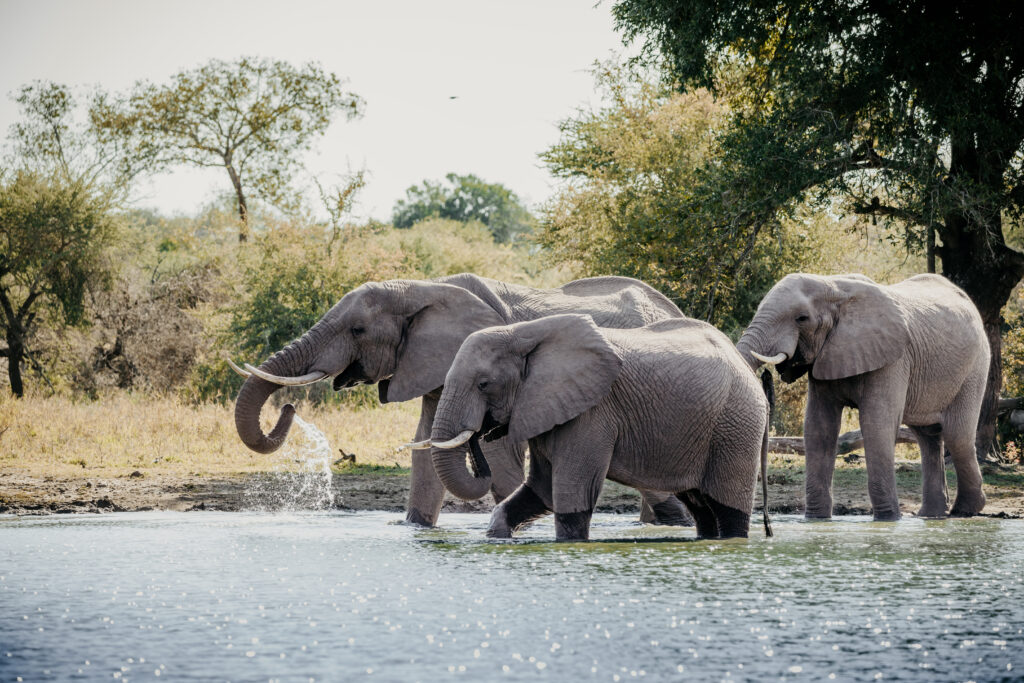
From its earliest years, Karingani was developed around the idea that restoring a landscape required more than simply protecting land. Habitat needed to recover, wildlife populations had to be rebuilt and the ecological processes supporting a functioning ecosystem needed to be restored and managed.
Over time, this has included wildlife reintroductions, vegetation and fire management and ecological monitoring. Science and technology continue to support this work today, with tools including tracking collars and spatial monitoring helping conservation teams better understand wildlife movements and the use of habitats, water sources and movement corridors.
But, as Karingani’s current team points out, a reserve of this scale depends on far more than its conservation department alone. Scouts, maintenance teams, logistics, procurement, hospitality and numerous other departments all contribute to keeping the reserve functioning, alongside continued investment in staff development, training and welfare.
Conservation and Communities
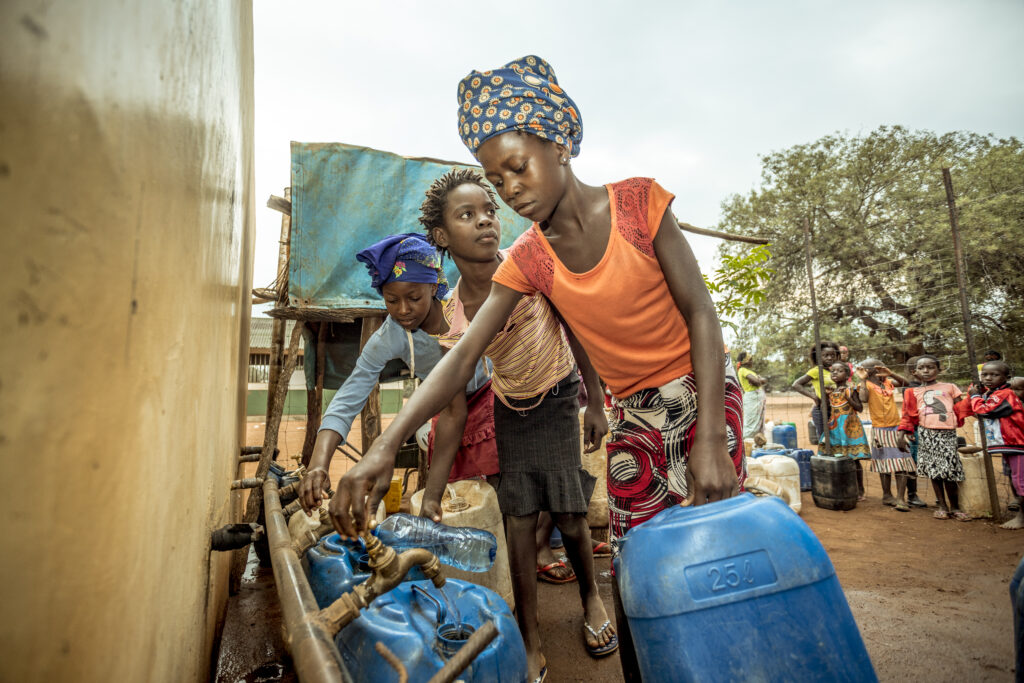
People have been part of Karingani’s approach from the beginning. The reserve works with neighbouring communities through initiatives spanning employment, education, healthcare, water access, skills development and livelihood opportunities. One recent example saw a new borehole drilled in Década da Vitória after the community’s previous borehole collapsed.
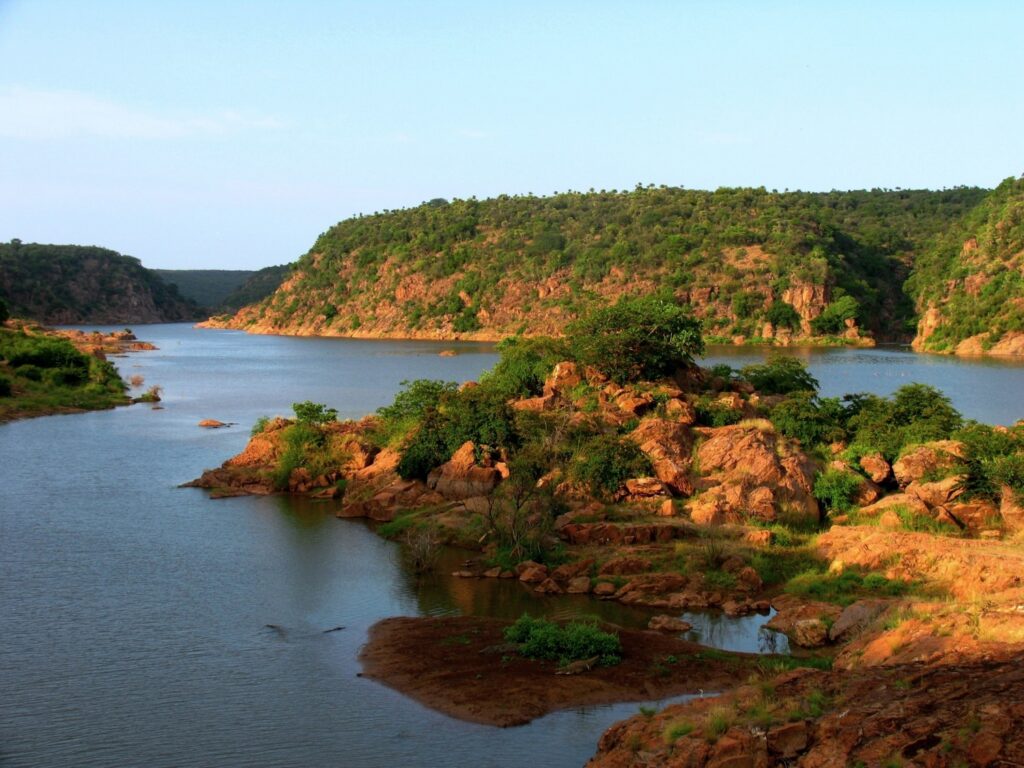
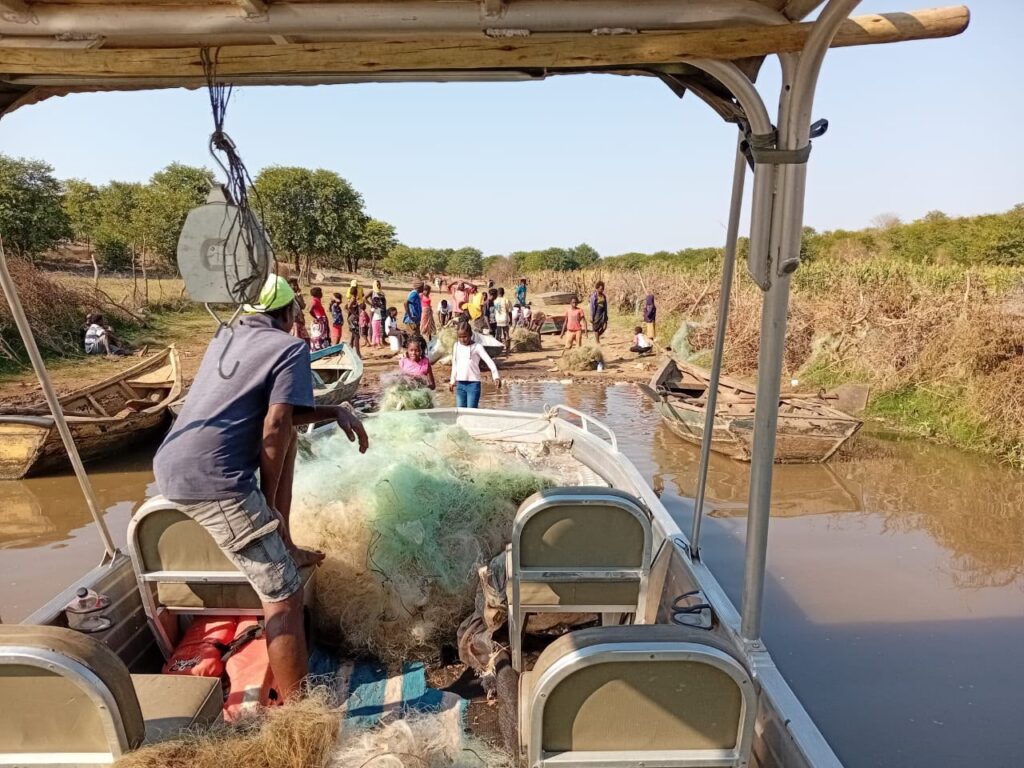
Further north, the Olifants River and wider Massingir system demonstrate just how closely conservation and livelihoods can intersect. Fishing provides both food and income for neighbouring communities, but the long-term sustainability of the fishery depends on maintaining healthy fish populations.
Over the past two years, Karingani has worked with Advance Africa Management Services to study the Massingir Dam fishery and its value chain. The work has combined biological research with engagement with fishers and traders, identifying opportunities to improve both sustainability and livelihoods through better monitoring, cold storage, processing facilities and infrastructure at landing sites.
Rather than treating conservation and community needs as separate issues, the initiative is exploring how the resource can remain ecologically sustainable while supporting the people who depend upon it.
Looking Ahead
Karingani is now approaching another significant stage in its development with Aman Karingani, the reserve’s first major safari lodge development. Tourism forms part of Karingani’s vision for creating a financially sustainable conservation model. The new development has the potential to generate resources for conservation while creating employment, training and wider economic opportunities.
As the Karingani team explained:
“The strongest outcome would be a model in which tourism contributes to conservation, creates opportunities for neighbouring communities and supports the long-term development of the reserve.”
Conservation Beyond Borders
Karingani has been part of GKEPF from the beginning, joining other protected areas across the landscape as one of GKEPF’s founding Management Authorities in 2016. As the only GKEPF Management Authority in Mozambique, its position along the eastern boundary of the Greater Kruger gives Karingani an important role in the wider wildlife protection network.
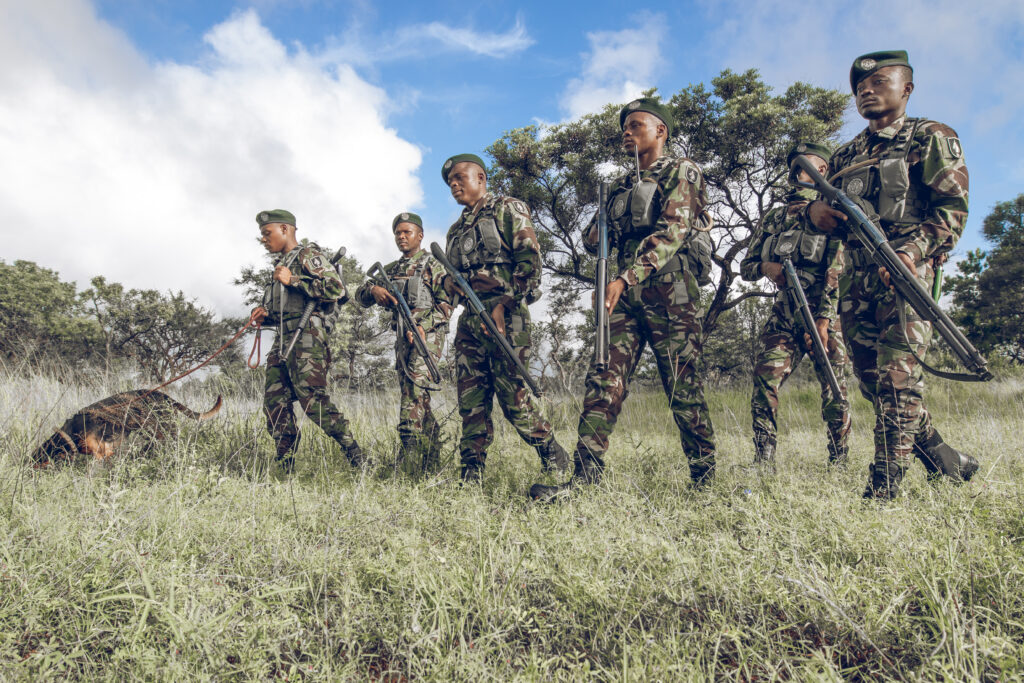
Working through GKEPF enables Karingani to collaborate with protected areas facing many of the same wildlife crime challenges, sharing information, experience, technology and resources. For Karingani’s security team, this is particularly important in responding to organised wildlife crime that moves across reserve and international boundaries.
As Karingani’s Head of Counter Poaching and Security, Machiel Lambert, explains, “Being part of this network means we do not have to face the poaching threat in isolation.”
Through this collaboration, Karingani contributes to a coordinated approach to wildlife protection that extends beyond any single protected area.
Nearly two decades after work to establish Karingani began, its story is still being written. From restoring a degraded landscape to building stronger connections across communities, conservation areas and international boundaries, Karingani continues to demonstrate what can be achieved when conservation is approached at the scale of the landscape.