Building a Stronger Conservation Landscape
For decades, Thornybush Nature Reserve operated as a fenced protected area, managing its wildlife, habitats and security within clearly defined boundaries. In 2017, the removal of its eastern boundary fence with Timbavati Nature Reserve changed that approach fundamentally.
Wildlife could move freely between Thornybush, Timbavati and Kruger National Park, connecting the reserve to the wider Greater Kruger open system. For Thornybush, this meant more than allowing animals to move across previously fenced boundaries. It required a different approach to conservation management.
Today, decisions about fire, water, elephant impacts, research and wildlife protection are increasingly made in collaboration with neighbouring protected areas, recognising that ecological processes and conservation challenges extend far beyond individual reserve boundaries.
From an Independent Reserve to a Connected Landscape
Thornybush is one of the longest-standing private reserves in the Greater Kruger, with its first commercial lodge opening in 1961. Formally proclaimed in the early 1990s, the reserve expanded over the following decades before joining the open Greater Kruger system in 2017.
According to Hannes Zowitsky, Warden of Thornybush Nature Reserve, conservation priorities have shifted from managing a self-contained property to contributing to the management of a much larger protected landscape. This is reflected in everything from habitat management and research to security planning. Thornybush works with neighbouring reserves through the Associated Private Nature Reserves (APNR) Joint Operations Committee and within the framework of the Great Limpopo Transfrontier Conservation Area Cooperative Agreement.
With its eastern fence removed, Thornybush’s western boundary has also taken on greater importance. In this area, it effectively forms part of the western boundary of the Greater Kruger open system, making its protection important not only for Thornybush but for the connected protected areas beyond it.
Protecting More Than One Reserve
Wildlife crime remains one of the reserve’s most significant challenges, and the nature of the threat continues to evolve.
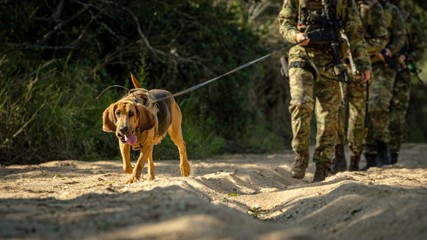
Over time, Thornybush has developed a specialised anti-poaching unit with trained personnel, equipment and a substantial canine capability. These teams play an important role in protecting wildlife within the reserve, while working alongside neighbouring protected areas and GKEPF to coordinate security across the wider landscape.
Experience has reinforced the importance of cooperation and communication. As Hannes Zowitsky explains,
“Good relationships with our neighbours and open communication are vital. Protecting Thornybush means protecting the larger landscape, and no reserve can do that alone.”
This collaborative approach has also supported one of the Greater Kruger’s most significant recent conservation initiatives: Rhino Rewild.
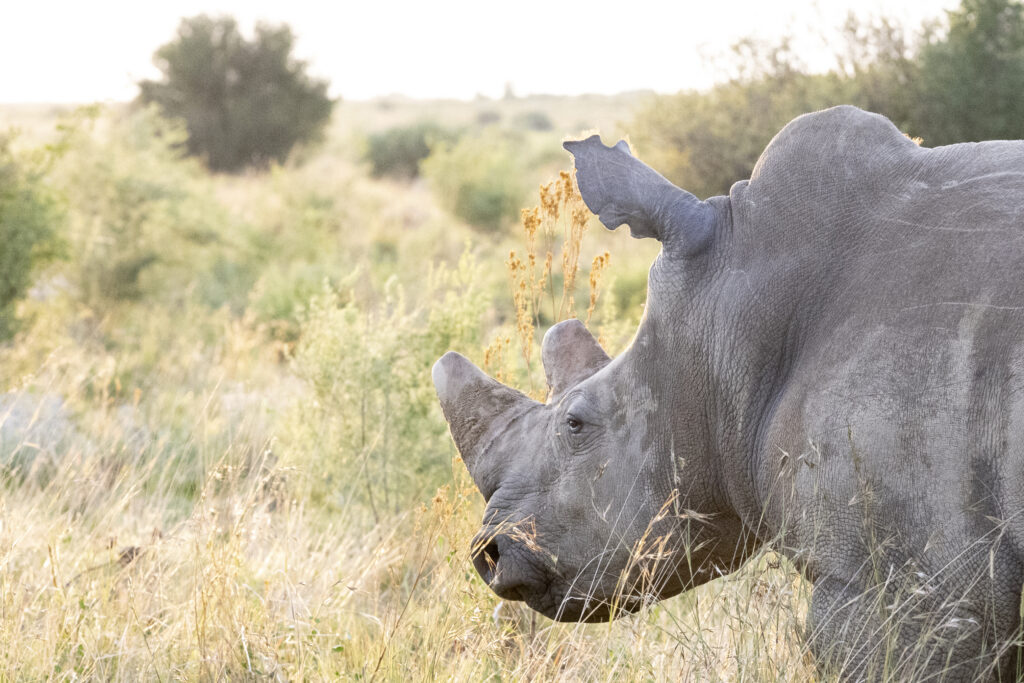
Working alongside African Parks, GKEPF and other participating protected areas in the landscape, Thornybush contributed to the return of southern white rhinos to the Greater Kruger. During the 2025 translocations, the reserve established and managed a holding boma for a group of rhinos before their release into the open system. The animals have since settled well, with numerous calves subsequently born on the reserve.
But their return represents more than an increase in rhino numbers.
“Rhino is a sentinel species. They are usually the first animals to be poached, so losing them is an early warning that an area is in trouble. They are also usually the last to be brought back once an area is secure, so their return is a real sign of conservation success and of hope in the landscape.”
Rhinos also play an important ecological role. Through grazing, they influence grass structure and create feeding opportunities for other herbivores, while their dung contributes to nutrient cycling and seed dispersal.
Their return is therefore significant both for wildlife conservation and for the restoration of ecological processes across the landscape.
Research That Looks Beyond Boundaries
Scientific research is another important part of Thornybush’s approach to conservation management.
Through the APNR framework, the reserve participates in collaborative research involving vultures, wild dogs, Southern Ground-Hornbills and buffalo. These species offer valuable insights into the health and functioning of the wider ecosystem, particularly where their movements extend across multiple protected areas.
“What excites me is that these species tell us about the health of the whole system.” – Zowitsky
Thornybush is also involved in research with the University of British Columbia using NASA satellite data to monitor changes in vegetation. The research includes information from GEDI, a space-based laser instrument that measures the three-dimensional structure of trees and vegetation. This allows researchers to examine changes in tree cover, vegetation height and habitat structure across areas far larger than could practically be monitored through fieldwork alone.
For reserve managers, this information can contribute to a better understanding of how the landscape is changing and help inform future habitat management decisions.

Conservation, Tourism and Communities
For Thornybush, conservation and tourism are closely interconnected.
“Tourism in Thornybush pays for conservation, and conservation is what guests come for. If one fails, the other follows.”
Neighbouring communities are equally important to the reserve’s long-term sustainability. Employment, skills development and opportunities for local businesses help ensure that the benefits of conservation extend beyond the reserve itself.
Thornybush’s wider tourism and community initiatives, run both by its members directly and by the reserve itself, support education, training and enterprise development, while GKEPF has contributed to staff development through initiatives such as financial literacy training.
The relationship between Thornybush and GKEPF has been particularly valuable in bringing protected areas together around shared conservation priorities.
“GKEPF has been the glue. Rhino Rewild only worked because the reserves acted as one in the landscape.”
Beyond wildlife protection, this collaboration has also supported staff development and created opportunities for community socio-economic upliftment.
Building the Base
Looking ahead, the priority for Thornybush is what Zowitsky describes as “building the base”.
This means maintaining strong wildlife protection, managing the reserve effectively, investing in staff and ensuring that conservation decisions are increasingly informed by research.
The longer-term ambition is for Thornybush to remain a financially resilient, well-managed and trusted conservation partner within the Greater Kruger.
For a reserve whose history has included decades of change, that ambition reflects a recognition that successful conservation depends not only on individual projects or achievements, but on consistently maintaining the people, partnerships and systems that make them possible.
Beyond the operational challenges and responsibilities, however, there remains something much simpler at the heart of Thornybush: the Drakensberg escarpment on the horizon, the Greater Kruger stretching eastwards, the people who have dedicated years to caring for the reserve, and the wildlife encounters that remain excellent.
“You can drive the same road a hundred times and still be surprised by unique experiences.”
It is a reminder that even after decades of working in the same landscape, there is always something new to discover.