From 5–8 May 2026, GKEPF supported the Living with Wildlife Debate and Public Speaking Competition held at Ninakhulu Primary School in Phalaborwa, engaging 121 learners from primary and high schools across the Namakgale and Lulekani circuits.
The event was organised in partnership with the Balule Outreach Trust, SANParks (Kruger National Park Socio-Economic Transformation team), and Selati Wilderness Foundation. GKEPF participated as part of its Prosper Programme and broader environmental awareness and education efforts. Special thanks are extended to the Balule Outreach Trust for leading the project, Ninakhulu Primary School for hosting the event, and to the Oak Foundation for funding support to GKEPF.
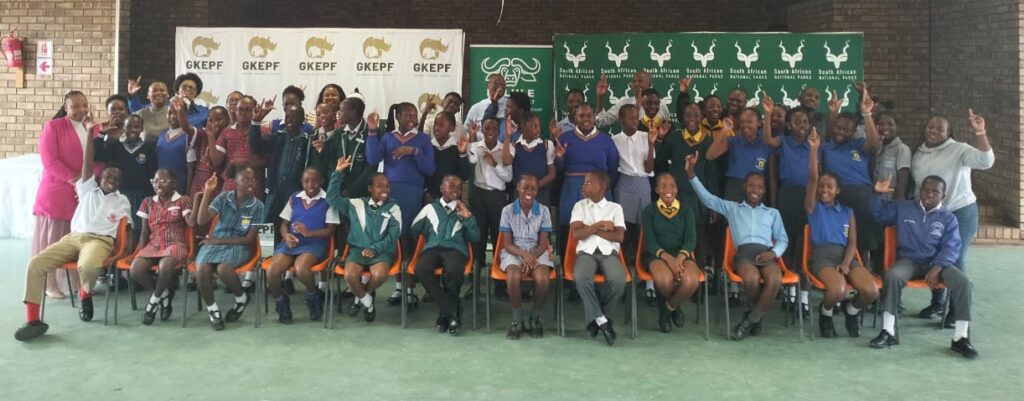
The competition created space for learners to engage directly with conservation-related challenges through debate, discussion, research, and public speaking. Participants explored topics linked to environmental crime, bushmeat harvesting, snaring, and the importance of protecting natural resources and biodiversity within the Greater Kruger landscape. The aim of the programme was not only to raise awareness of environmental issues, but also to encourage learners to investigate these topics for themselves, form their own perspectives, and engage critically with the complexities surrounding conservation and protected areas. Alongside environmental awareness, the event encouraged confidence-building, critical thinking, communication skills, and public speaking abilities, providing young people with a platform to express their ideas and perspectives in front of their peers, educators, and conservation practitioners.
Importantly, the competition also provided an opportunity for conservation organisations to hear directly from young people living in communities neighbouring protected areas. Understanding how these communities view conservation and the challenges they face is an important part of building long-term support for conservation initiatives. Bushmeat poaching and snaring remain significant challenges in parts of the Phalaborwa region and neighbouring protected areas. Through guided research and discussion, learners were encouraged to explore these issues and consider their impacts on wildlife, communities, and conservation efforts more broadly.
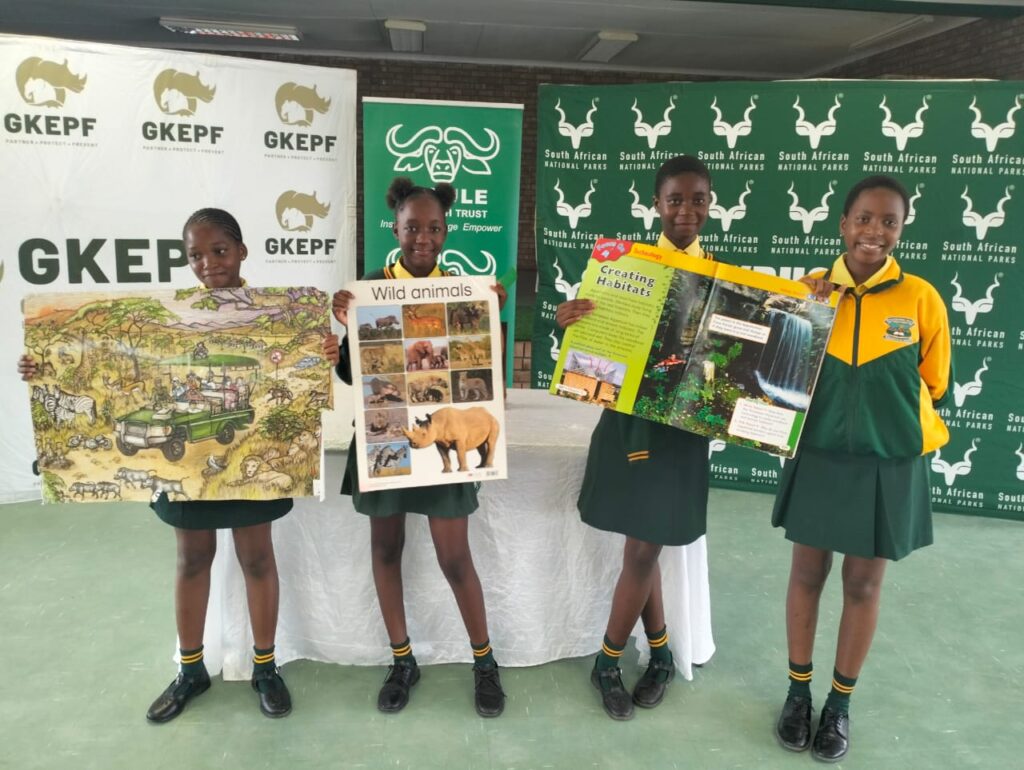
Feedback from participants highlighted the value of engaging with conservation topics that they might not otherwise encounter through the school curriculum. Learners demonstrated strong engagement with discussions around wildlife, conservation, and environmental challenges affecting the region, while several participants expressed an increased interest in environmental issues and their relevance to local communities. One high school learner also expressed an interest in pursuing a career in conservation, demonstrating how programmes such as these can help inspire future environmental stewards and conservation professionals.
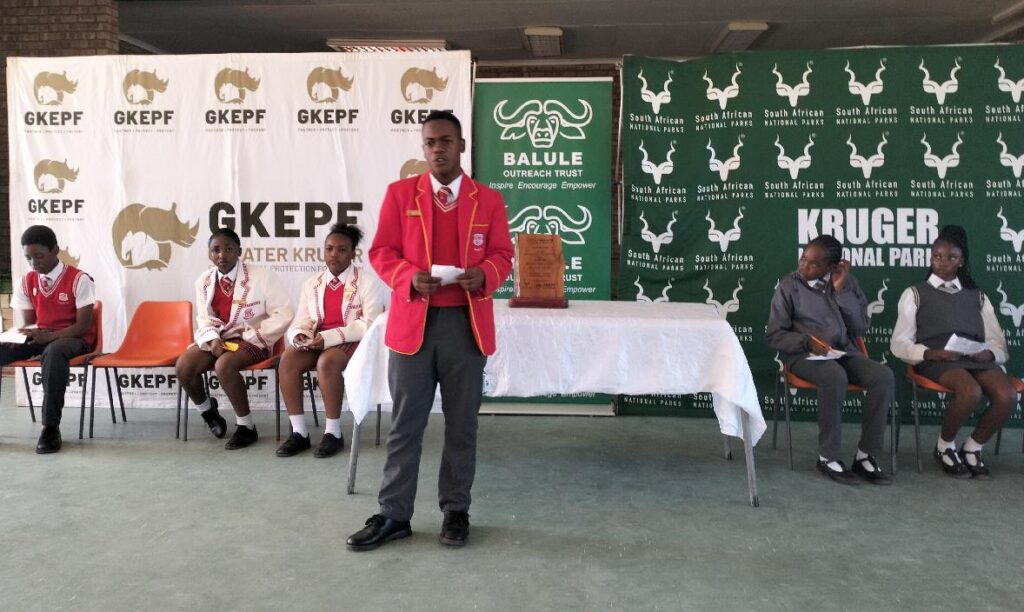
The competition will culminate in a final round later this year, with four primary schools and four high schools earning the opportunity to attend a two-night experience at Koru Camp. In addition, one primary school and one high school will participate in an educational visit to Kruger National Park.
Initiatives such as these play an important role in supporting future environmental stewardship by creating opportunities for young people to engage meaningfully with conservation issues and recognise their role in the future of the Greater Kruger landscape.