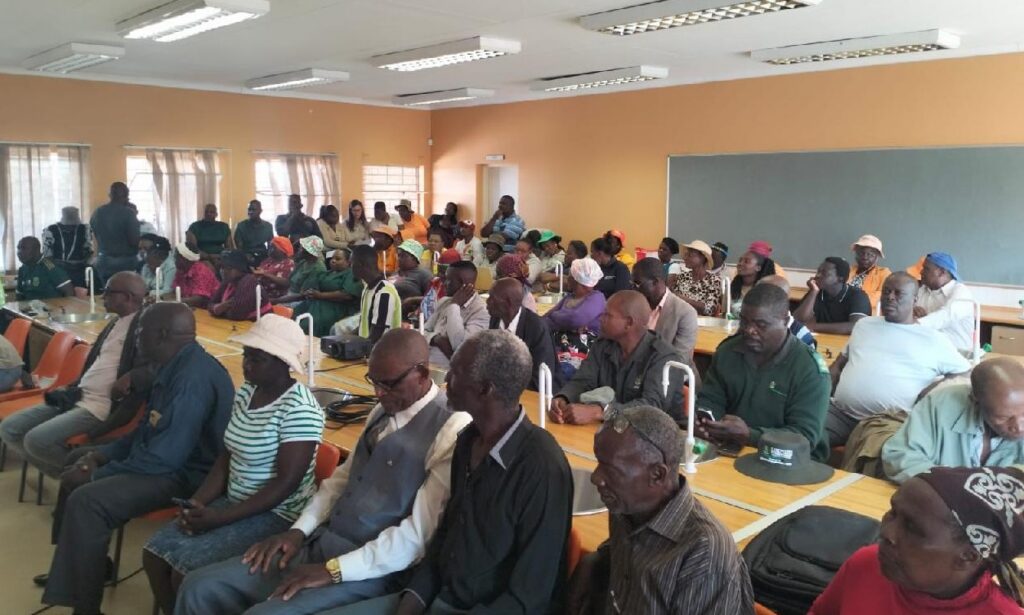
From 14 to 18 September, communities along the western boundary of Kruger National Park came together with conservation partners, government departments and Traditional Authorities to address a shared concern: the impacts of wildlife poisoning and snaring.
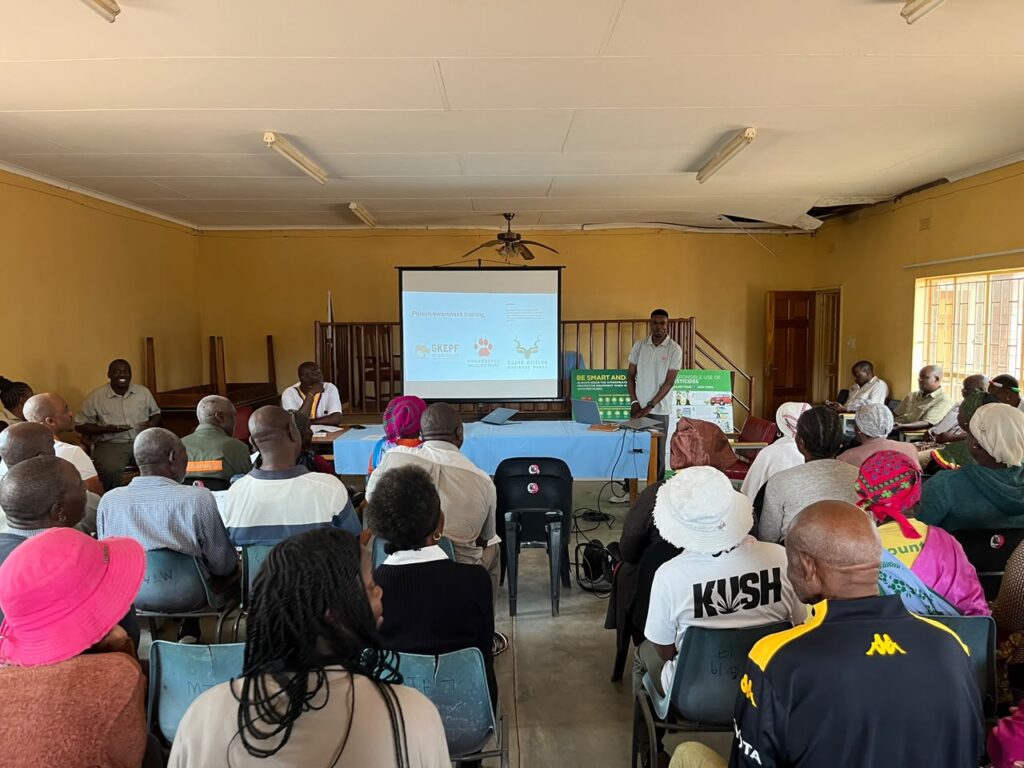
The awareness programme was held in communities within the Majeje, Selwana, Makhuva and Mbaula Traditional Authorities, reaching 365 participants. The events were organised in response to increasing incidents of poisoning and snaring in the Mahlangeni and Phalaborwa regions, which have resulted in the deaths of wildlife including lions and vultures.
Led by Kruger National Park’s Socio-Economic Department, the programme brought together a range of organisations with different perspectives on the issue. The Endangered Wildlife Trust presented on poisoning and snaring, while the Department of Agriculture discussed the safe use and storage of chemicals. Rangers from Kruger National Park and the Limpopo Department of Economic Development, Environment and Tourism (LEDET) shared their experiences of wildlife poisoning and snaring, and the Directorate Environmental Compliance Enforcement – Biodiversity Protection addressed the criminal implications. Traditional Authorities also shared the challenges their communities experience.
An Issue Affecting Wildlife and Communities
While poisoning and snaring pose a serious threat to wildlife, discussions during the programme highlighted that their impacts do not stop at the boundaries of protected areas.
Community members spoke about livestock being caught in snares and domestic animals (and even humans) being poisoned, while others raised concerns about the origins and safety of illegally sold meat. In Makhuva, one participant described snares catching livestock as a significant local problem.
These concerns reinforced one of the central messages of the programme: protecting wildlife and supporting safe communities are closely connected. Poison and indiscriminate snares can affect wildlife, livestock, human health and livelihoods.
From Awareness to Action
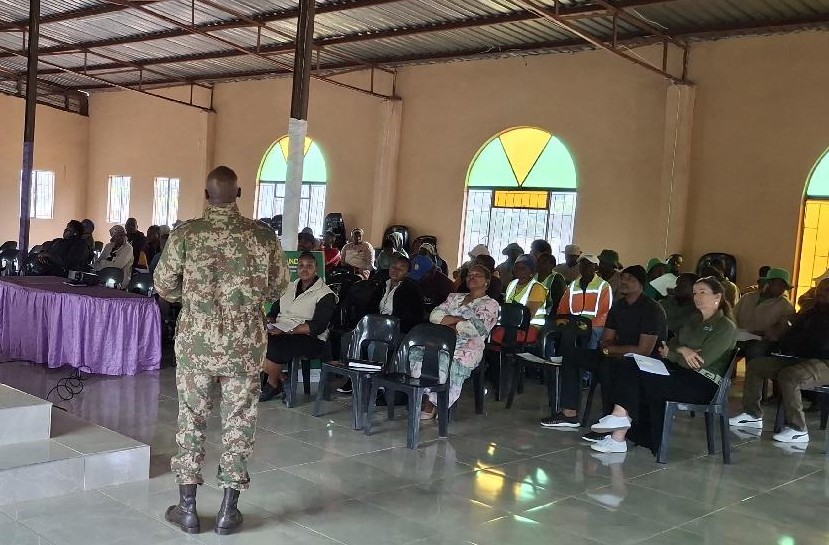
The surveys conducted during the programme also highlighted gaps in knowledge around how incidents should be reported. Before the sessions, some participants said they did not know where to report suspected poisoning or snaring, while others described uncertainty or mistrust around existing reporting channels.
Responses after the awareness sessions showed participants had gained new information about poisoning, snaring and reporting procedures. One participant said:
“We were in the dark, we are going to conserve as we are [now] aware that we must play a role as communities.”
Traditional Authorities also encouraged community members to stay away from illegal activities and not to purchase illegally sold game meat. Lazaro Sibiya, GKEPF Community Partnerships and Project Coordinator, reported that community members expressed a willingness to work with law enforcement agencies to address poisoning and snaring, recognising that these activities affect their livestock as well as wildlife.
GKEPF supported the programme as part of its Prosper Programme and ongoing Education and Awareness work, helping to strengthen community awareness and encourage environmental stewardship in communities neighbouring protected areas.