Imagine trying to keep track of a rhino across thousands of hectares of bushveld. Now imagine doing that for an entire population, with animals moving through dense vegetation, crossing rivers and travelling freely between neighbouring protected areas. Despite their size, rhinos can be surprisingly difficult to find. An animal might be seen regularly for several weeks before disappearing into the bush, only to turn up somewhere completely different months later. Across the Greater Kruger, where much of the landscape forms a connected open system, monitoring these movements is an important part of understanding and protecting rhino populations.
Over the years, monitoring methods have developed considerably. Today, conservation teams combine traditional field observations with modern tracking technology, gathering information that helps them identify individual animals, follow their movements and understand how populations are changing.
How Do You Identify a Rhino?
One of the most widely used methods is ear notching. During a veterinary procedure, small notches are made at designated positions along the edges of a rhino’s ears, creating a unique identification pattern. This allows monitoring teams to recognise an individual animal during future sightings, even when several rhinos look remarkably similar.
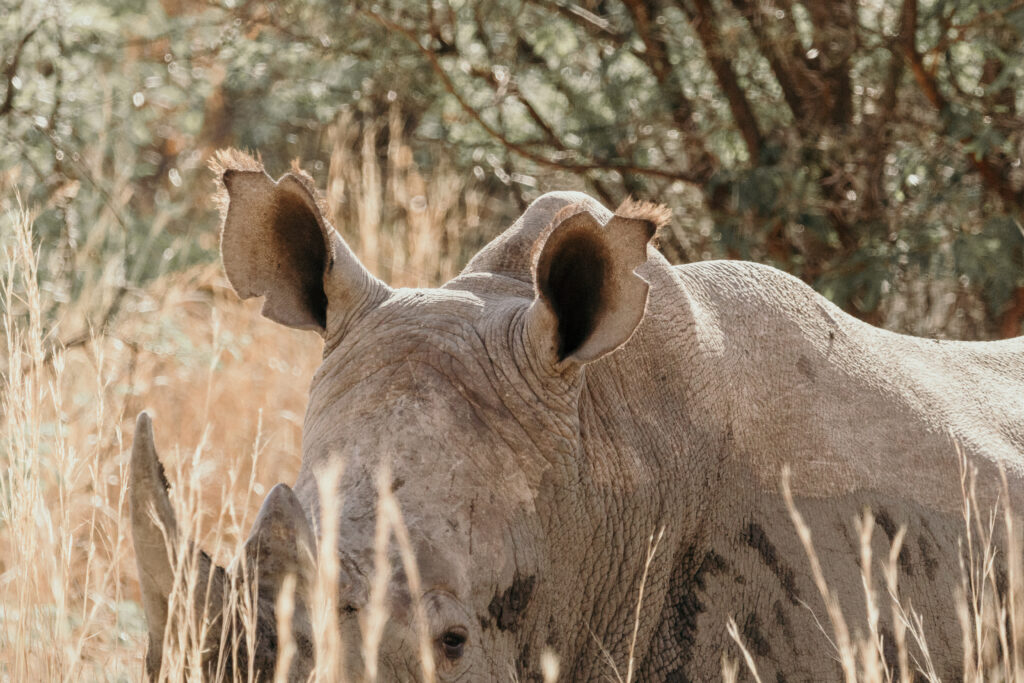
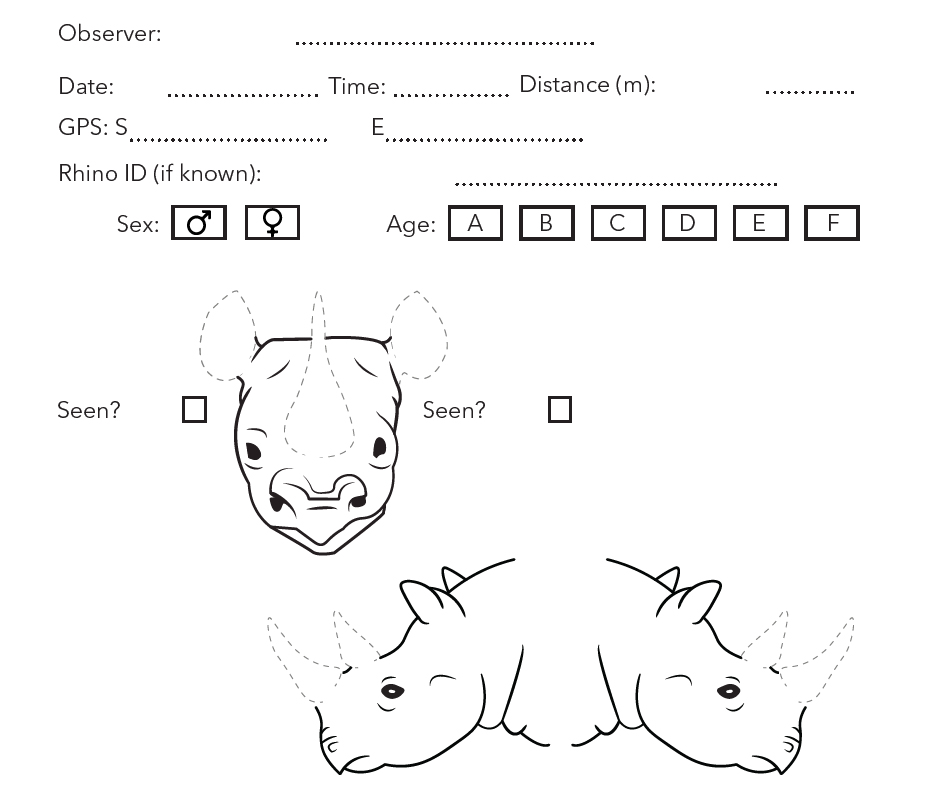
Rhinos can also be identified through their horn shape, scars, ear damage and other distinguishing features. Photographs are particularly useful for comparing sightings and maintaining individual identification records.
When a rhino is encountered, monitoring teams may record its identity, location, physical condition, behaviour and any calves or other animals accompanying it. Over time, these observations build a history of the individual, helping conservationists understand where it has been seen, whether it is breeding and how it is faring.
Following Rhinos with Technology
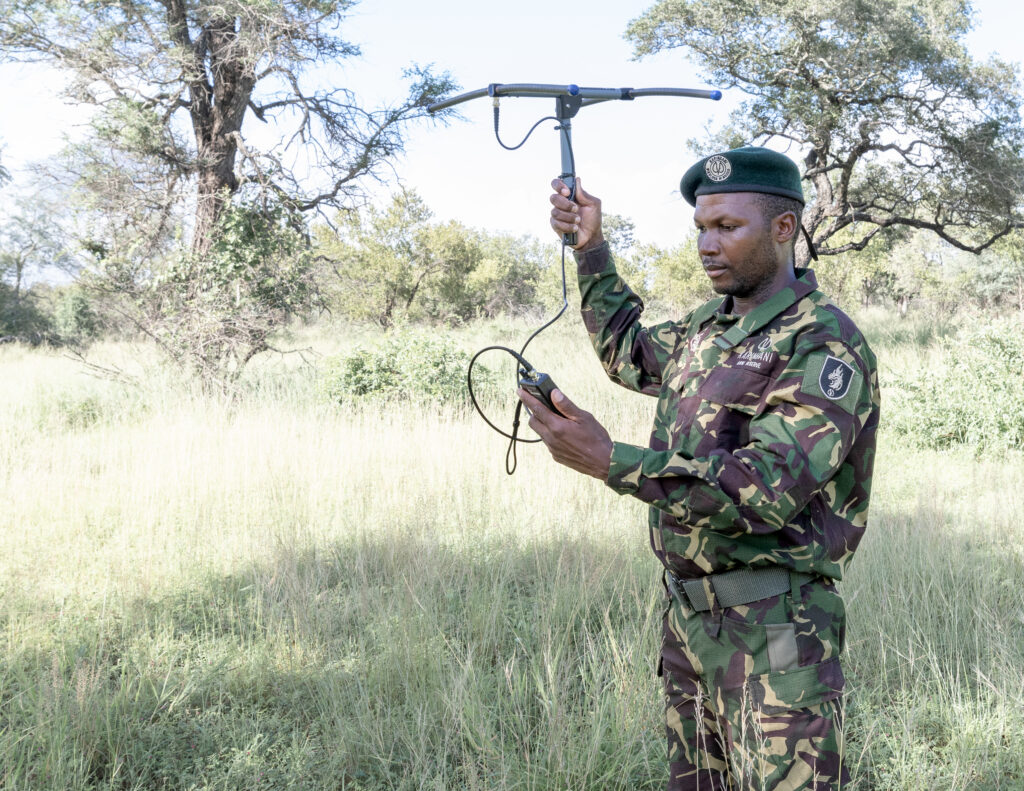
Electronic tracking devices have added another dimension to rhino monitoring, allowing conservation teams to gather information about an animal’s movements even when it is out of sight. Some devices use GPS to determine a rhino’s location and satellite communication to transmit that information. Others use low-power radio networks, including technologies such as Sigfox and LoRa, which transmit data through compatible ground-based infrastructure. These systems can provide valuable information about movement patterns, habitat use and how rhinos travel between different areas.
The equipment itself can take several forms. Leg collars and ankle-mounted trackers can contain GPS transmitters, radio equipment or movement sensors, while horn transmitters may be implanted into a rhino’s horn. Newer external horn pods can also be attached to the remaining horn stump following dehorning, providing another option for monitoring animals remotely.
Some tracking devices can also detect changes in activity or movement, offering additional information that may help conservation teams identify situations requiring closer attention.
By combining electronic tracking with ground patrols, camera traps and aerial monitoring, conservation teams can build a detailed picture of rhino movements and activity across the landscape. Each method contributes valuable information, helping teams maintain awareness of individual animals, recognise changes in behaviour and respond when something requires attention.
Why Is Rhino Monitoring Important?
By following individual rhinos over time, conservationists can record births and deaths, assess breeding success, monitor health and better understand population demographics. Repeated observations also reveal how animals use different habitats, establish territories and move through the landscape.
This information is particularly valuable following translocations, when rhinos are introduced into new areas. Their release is only the beginning of the process. Understanding how they settle into their surroundings, interact with other rhinos and eventually contribute to the breeding population requires continued monitoring.
Rhino monitoring also supports wildlife protection. Information gathered through sightings, tracking devices and field observations helps conservation teams maintain situational awareness and identify changes that may require investigation. It provides an important foundation for both immediate conservation decisions and longer-term population management.
Bringing the Information Together Across the Greater Kruger
In much of the Greater Kruger, rhinos are not confined to individual protected areas. An animal recorded in one reserve may later be encountered in another, making information sharing particularly important. Without coordination between monitoring teams, it becomes difficult to maintain an accurate understanding of a population that moves across reserve boundaries.
This is where GKEPF plays an important role. Through Dr Zala Hartman, Rhino Management Group (RMG) Coordinator, GKEPF supports collaboration between Management Authorities to develop a broader understanding of the Greater Kruger’s rhino population. The group brings together monitoring information from across the open system, allowing observations collected by individual reserves to contribute to a shared picture of the population. This includes records of individual sightings, identification details, distribution, births, deaths, veterinary interventions and population demographics. Information is brought together through an integrated database, supporting the identification and monitoring of individual animals over time, even when they move between protected areas.
An important part of Zala’s work is helping to ensure that monitoring information is recorded and shared consistently. Standardised identification records, reporting and field observations make it easier to compare information collected by different teams and develop a more reliable understanding of the population.
GKEPF also supports rhino monitoring through fixed-wing aerial operations, complementing the work of rangers and dedicated monitoring teams on the ground. Together, these activities contribute to the wider effort to understand rhino movements, population changes and conservation needs across the landscape.
Monitoring for the Future
As rhino populations recover and animals move throughout the Greater Kruger, continued monitoring remains essential. Understanding where animals establish territories, whether calves are surviving and how populations are developing helps conservation teams make informed decisions about their long-term management.
No single method provides every answer. Ear notches help establish identity, tracking devices provide movement information, and field observations offer valuable insight into an animal’s condition and behaviour.
Together, these methods, supported by cooperation between Management Authorities, help build a clearer understanding of Greater Kruger’s rhinos and contribute to their protection for generations to come.